
Our Projects
Suffolk Coast Nature Recovery Project
The Suffolk Coast Nature Recovery Project operates across three key habitat types:
Freshwater and Fen
Woodland and Heath
Coastal Habitats (inc. marshes, lagoons, sand dunes & vegetated shingle)
It focuses on species-level interventions to conserve and enhance populations, while improving overall habitat biodiversity. We work with local partners and stakeholders to achieve this.
Each species requires an individual approach, and our actions are guided by priorities and recommendations set out in the Local Nature Recovery Strategy (LNRS), GB Red List, Suffolk Biodiversity Information Service (SBIS) and individual Natural England species strategies.
Suffolk Swallowtail Project
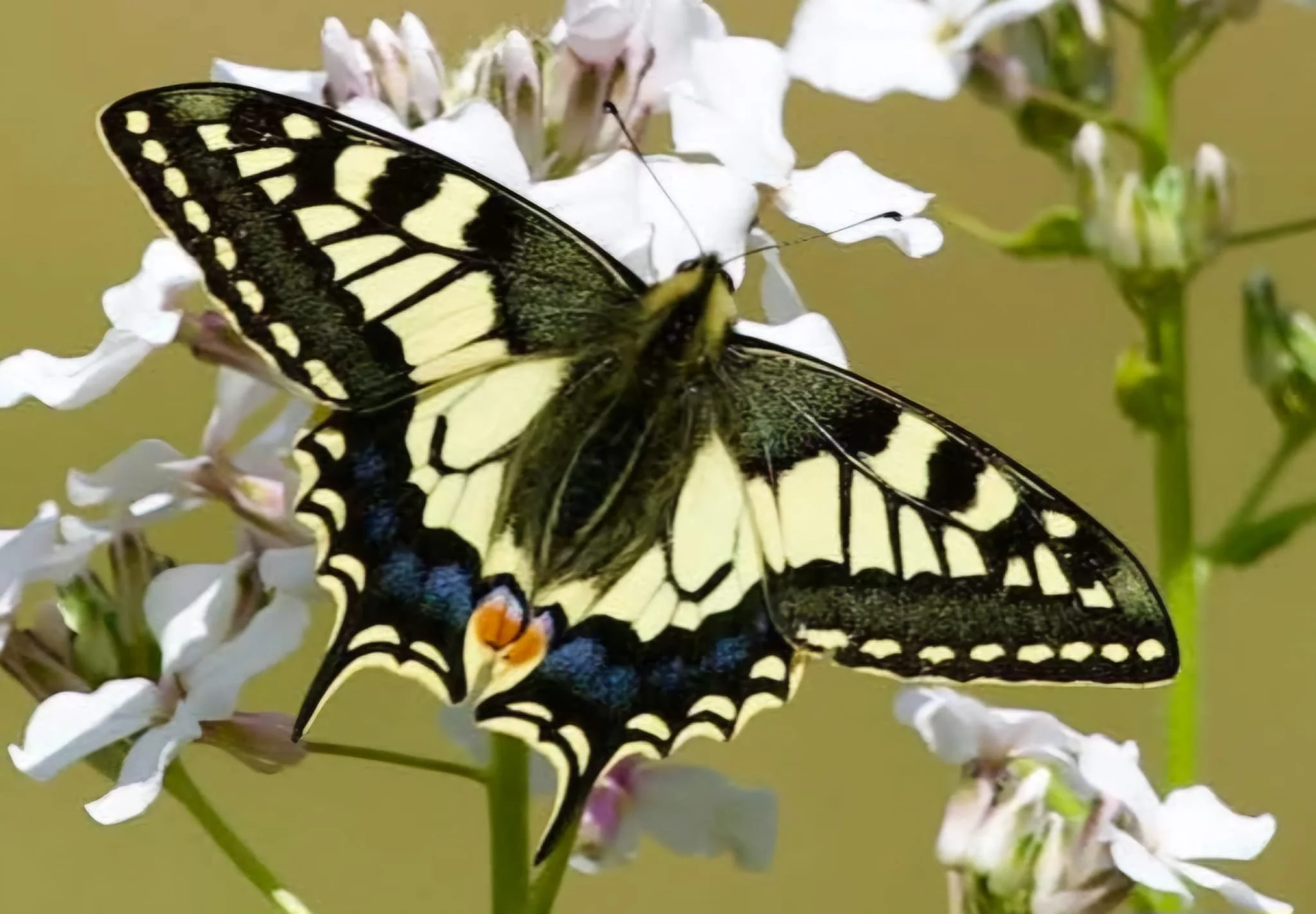
© Trevor Mayes
Working with Natural England and regional partners, we have been collecting Milk-parsley seeds from across Norfolk & Suffolk, with the aim of creating new populations of Milk-parsley in the Waveney Valley of Norfolk/Suffolk and along the East Suffolk Coast.
Milk-parsley is the only food plant of the UK race of Swallowtail Butterfly, so to increase the butterfly population, we need to plants thousands of Milk-parsley across the landscape.
In 2026 we will be planting 10,000 Milk-parsley in East Suffolk, we have also created a 0.500ha (5000sq meter) Milk-parsley trial bed at our Haddiscoe Island reserve. In 2027 we hope to plant at least 100,000 Milk-parsley across our sites.
Endemic Elm
Our endemic Elm project, is working with partners including Natural England and the John Innes Institutes, to propagate Elms trees from Norfolk & Suffolk.
In 2025 we received funding from Essex & Suffolk Coats & Heath and Dedham Vale National Landscapes, Farming in Protected Landscape (FiPL) fund to surveyed Elm and map populations and identify potential disease resistant trees. In 2026 we received funding from the Sizewell Natural Environment Improvement Fund, to propagate and distribute saplings from the Elm Trees at Friday Street in Suffolk.
We are prioritising trees that appear to be disease resistant and are working with partner organisations to asses disease resistance at field trial in Norfolk.
At Shorelands, we hold a collection of the regions native Elm trees and propagate saplings each summer for distribution across East Anglia.
Elm Partner Species
Alongside our Elm propagation work, we are working to conserve species that are associated to Elm.
In South Norfolk, we are translocating the Orange-fruited Elm Lichen (Caloplaca luteoalba) to suitable sites within its historic distribution.
In North Suffolk, we are translocating spores of the Pepper Pot Fungus (Myriostoma coliforme) to neighbouring sites and area also introducing spores to the pots of our sapling plants, with the aim of increasing the population of the endangered species.
Suffolk Nightingale Project
Working in partnership with the Waveney Bird Club, we are monitoring the Nightingale population on the East Coast of Suffolk. Our aim is to produce some best practice guidelines for landowners and maps the breeding territories across East Suffolk. Our project will also fit identification rings to birds to help monitor territories and data tags, to help us understand the migratory routes through Europe and West Africa.
Species List
Below is a list of some of the species we are currently working with across our projects. We will add more information in the future about each of the species.
Fauna
> Barberry carpet moth Pareulype berberat
> Duffey's bell-headed spider Praestigia duffeyi
> Fen raft spider Dolomedes plantarius
> Fisher's estuarine moth Gortyna borelii
> Grey partridge Perdix perdix
> Heath grasper spider Haplodrassus dalmatensis
> Large copper butterfly Lycaena dispar
> Large marsh grasshopper Stethophyma grossum
> Lesser water measurer Hydrometra gracilenta
> Moss carder bee Bombus muscorum
> Narrow-mouthed whorl snail Vertigo (Vertilla) angustior
> Nightingale Luscinia megarhynchos
> One-grooved diving beetle Bidessus unistriatus
> Rest harrow moth Aplasta ononaria
> Saltmarsh short-spur beetle Anisodactylus poeciloides
> Sand running spider Rhysodromus fallax
> Sea aster bee Colletes halophilus
> Silky gallows spider Phycosoma inornatum
> Swallowtail butterfly Papilio machaon
> Wall butterfly Lasiommata megera
> Water dock case-bearer moth Coleophora hydrolapathella
> Whelk-shell jumper spider Pseudeuophrys obsoleta
> Yellow-striped bear spider Arctosa fulvolineata
Flora and Fungi
> Bearded stonewort Chara canescens
> Bearded tooth fungus Hericium erinaceus
> Borrers salt marsh grass Puccinellia fasciculata
> Cambrdige milk parsley Selinum carvifolia
> Coral tooth fungus Hericium coralloides
> Coral tooth fungus Hericium coralloides
> Cotton weed Achillea maritima
> Crested buckler fern Dryopteris cristata
> Elm species Ulmus spp
> Fen orchid Liparis loeselii
> Fen Ragwort Senecio paludosus
> Fen violet Viola persicifolia
> Fen wood rush Luzula pallescens
> Flat sedge Blysmus compressus
> Fox-tailed stonewort Lamprothamnium papulosum
> Frogbit smut Tracya hydrocharidis
> Grass wrack pondweed Potamogeton compressus
> Grass-poly Lythrum hyssopifolia
> Greater water parsnip Sium latifolium
> Hogs fennell Peucedanum palustre
> Intermediate stonewort Chara intermedia
> Lichen sp. Bellicidia incompta
> Marsh stitchwort Stellaria palustris
> Milk parsley Thyselium palustre
> Oak polypore fungus Buglossoporus quercinus
> Orange Fruited Elm Lichen Caloplaca luteoalba
> Orchard tooth fungus Sarcodontia crocea
> Pedunculate sea-purslane Atriplex pedunculata
> Pepperpot Myriostoma coliforme
> Sandy stiltball Battarrea phalloides
> Sea aster Tripolium pannonicum
> Sea barley Hordeum marinum
> Sharp-leaved pondweed Potamogeton acutifolius
> Slender hare's ear Bupleurum tenuissimum
> Small cordgrass Spartina maritima
> Suffolk Lungwort Pulmonaria obscura
> Tiny earthstar fungus Geastrum minimum
> True service Sorbus domestica
> Tubular water dropwort Oenanthe fistulosa
> Water germander Teucrium scordium